 Ideal Fulfillment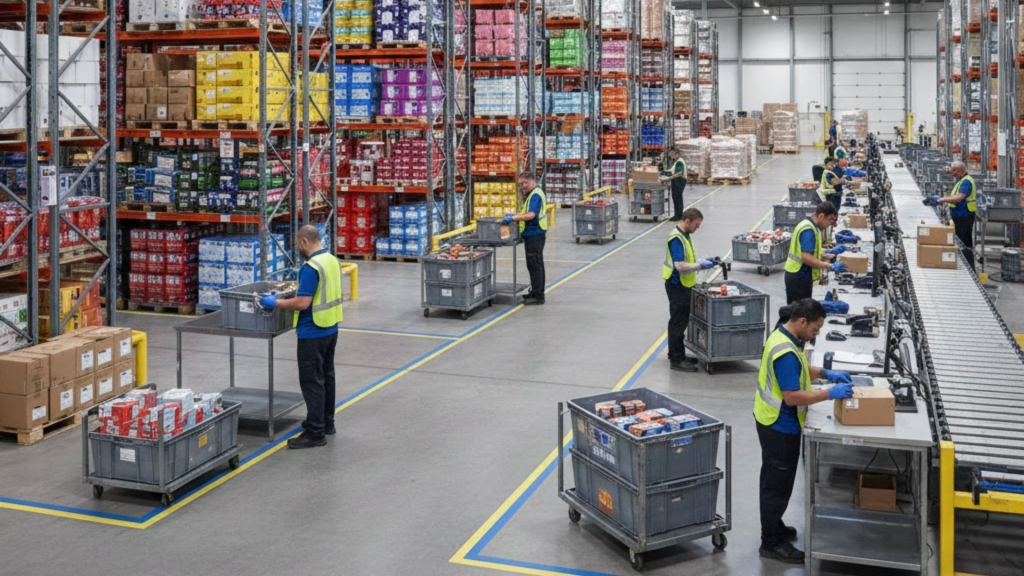
You place an online order, receive the confirmation email, and then the waiting begins. Sometimes a shipping update appears within hours. Other times, the order sits in “processing” for days, leaving you wondering what is actually happening behind the scenes. For shoppers, that waiting period can feel uncertain. For business owners, it can feel like a critical pressure point where trust is either built or lost.
At Ideal Fulfillment, this is one of the most common questions we hear from both sides of the transaction. Customers want speed and transparency. Brands want to meet expectations without setting promises they cannot keep. In a fast-paced ecommerce environment, fulfillment timing affects reviews, repeat purchases, and long-term brand loyalty.
As a team operating within a California fulfillment center, we see firsthand how inventory placement, automation, staffing, and carrier coordination influence how quickly an order moves from “placed” to “shipped.” Understanding fulfillment timelines does more than reduce frustration. It helps businesses set realistic expectations and helps customers understand what that processing window actually means.
How Long Does Fulfillment Take for Online Orders?
Order fulfillment for online purchases typically takes anywhere from same-day processing to three business days. The exact timeline depends on the fulfillment setup, order volume, inventory availability, and operational efficiency. In well-optimized systems, orders placed before a daily cutoff time are often processed and shipped the same day or within 24 hours. Other businesses may take one to three business days to pick, pack, and prepare orders before they are handed off to a shipping carrier.
It is important to separate fulfillment time from shipping transit time. Fulfillment refers only to what happens after an order is placed and before it leaves the warehouse or fulfillment center. Factors such as weekends, holidays, peak sales periods, and stock availability can extend this timeline. Orders that require customization, special handling, or manual review may also take longer.
Businesses that work with professional fulfillment partners, particularly those operating from a California fulfillment center, often achieve faster fulfillment due to automation, trained teams, and streamlined workflows. When fulfillment is handled efficiently, customers receive tracking updates sooner, shipments move faster, and overall satisfaction improves. While timelines vary, most competitive ecommerce brands aim to process orders within one to two business days.
How Long Does Order Fulfillment Usually Take?
In standard ecommerce operations, order fulfillment center usually takes between one and two business days. This window includes order verification, inventory picking, packing, labeling, and preparation for carrier pickup. Many brands highlight this timeline because customers increasingly expect fast turnaround.
Fulfillment speed depends heavily on infrastructure. Smaller businesses handling orders manually often struggle during busy periods. Larger brands or those partnered with a professional California fulfillment center tend to move faster thanks to automation and dedicated fulfillment teams.
At Ideal Fulfillment, we have seen how modest workflow improvements can significantly reduce fulfillment time. Brands that transition from in-house processing to a professional fulfillment environment often notice immediate improvements. This is also when many businesses begin comparing providers, evaluating service models, and getting quotes to determine which partner can meet speed requirements without sacrificing accuracy.
How Long Does a Company Have to Fulfill an Order?
There is no single federal law that requires a company to fulfill an order within a fixed number of days, but transparency is legally required. The Federal Trade Commission’s Mail, Internet, or Telephone Order Rule states that businesses must ship orders within the timeframe they advertise. If no timeframe is stated, orders must ship within 30 days. If delays occur, customers must be notified and given the option to cancel.
In reality, most ecommerce businesses aim to fulfill orders far sooner than that. Waiting weeks to process an order would be unacceptable by modern standards and would likely lead to complaints, chargebacks, or negative reviews.
According to the Federal Trade Commission, clear communication around fulfillment and shipping timelines is essential for consumer trust.
From our experience operating a California fulfillment center, brands that clearly communicate fulfillment timelines and consistently meet them build stronger relationships with customers. Speed matters, but clarity matters just as much.
What Is a Fulfillment Status on an Online Order?
Fulfillment status is the label that tells customers where their order is in the processing journey. Common statuses include pending, processing, fulfilled, shipped, or completed. Each status represents a specific stage behind the scenes.
When an order is marked pending or processing, payment has been received and the order is waiting to be picked and packed. When it is marked fulfilled, the order has been prepared and handed off to a carrier. It may still be in transit at this point.
Confusion often arises when customers assume fulfilled means delivered. In reality, fulfillment ends when the package leaves the facility. Shipping transit time begins after that. This is why tracking numbers and carrier updates are essential for clarity.
At Ideal Fulfillment, we help brands structure fulfillment statuses that are easy to understand. Clear status updates reduce customer confusion and lower support inquiries, which improves the overall experience.
What Is the Average Fulfillment Time?
Across the ecommerce industry, the average fulfillment time typically falls between one and three business days. Highly optimized fulfillment operations may process orders within hours, while less efficient systems take longer.
A strategically located California fulfillment center often has an advantage. Proximity to major ports, carriers, and large population centers can reduce both fulfillment and shipping time. Orders move faster when inventory is already close to customers.
Average fulfillment time also fluctuates seasonally. Holidays, promotions, and unexpected spikes can create delays even in strong operations. Businesses that plan ahead and work with experienced fulfillment center partners are better positioned to maintain consistent performance.
At Ideal Fulfillment, our focus is on minimizing fulfillment time without compromising accuracy. Speed only matters when it is reliable.
What Happens Inside a Fulfillment Center During Processing?
Once an order is placed, the fulfillment process begins almost immediately. Inventory systems verify stock availability and send instructions to the warehouse floor. Items are picked from storage, scanned for accuracy, and moved to packing stations.
At packing, products are secured with appropriate materials, labeled, and sorted by carrier. Orders are then staged for pickup based on carrier schedules and cutoff times. Every step is designed to minimize handling errors and delays.
In a professional California fulfillment center, automation plays a major role. Barcode scanning, real-time inventory updates, and order management systems reduce manual errors and speed up processing.
Why Fulfillment Speed Matters to Customers
Customers rarely think about fulfillment center unless something goes wrong. When orders arrive quickly and accurately, fulfillment feels invisible. When delays occur, trust erodes quickly.
Fast fulfillment improves customer satisfaction and increases the likelihood of repeat purchases. It also supports positive reviews and word-of-mouth recommendations. In competitive markets, fulfillment speed can be a deciding factor between two similar brands.
For businesses, this means fulfillment center is not just an operational concern. It is a customer experience issue. Choosing the right California fulfillment center directly affects brand perception.
Fulfillment Timing in California
California is one of the busiest ecommerce hubs in the country. High order volume, demanding delivery expectations, and complex logistics define the landscape. We have worked with brands that initially fulfilled orders from small spaces and struggled as demand grew.
After transitioning to a professional fulfillment setup, many businesses saw immediate improvements. Shorter fulfillment windows, clearer communication, and better inventory control helped restore customer confidence.
Local expertise matters. Understanding carrier schedules, cutoff times, and regional demand patterns can shave hours or even days off fulfillment timelines. This is a key advantage of working with a California fulfillment center that understands the local logistics environment.
Factors That Can Delay Fulfillment
Even well-run operations encounter delays from time to time. Common causes include inventory shortages, inaccurate stock counts, carrier disruptions, and sudden order spikes.
Custom products or special handling requirements can also extend fulfillment time. Businesses that rely on manual processes are more vulnerable to delays, especially during peak seasons.
The solution is preparation and partnership. Brands that plan ahead, communicate clearly, and work with experienced fulfillment providers reduce the impact of these challenges.
How Businesses Can Improve Fulfillment Time
Improving fulfillment time starts with accurate inventory management. Knowing what is in stock and where it is stored prevents delays before they begin.
Automation also plays a major role. Order management systems, barcode scanning, and optimized layouts speed up processing. Partnering with a professional California fulfillment center provides access to these tools without large upfront investment.
Clear cutoff times and carrier coordination further improve consistency. When businesses understand their fulfillment flow, they can set realistic expectations and deliver reliably.
Fulfillment Time Versus Shipping Time
One of the most common misunderstandings is confusing fulfillment time with shipping time. Fulfillment ends when the order leaves the facility. Shipping begins after carrier pickup.
A fast fulfillment operation paired with slow shipping can still feel delayed to customers. This is why location matters. A California fulfillment center can reduce transit time for West Coast customers while maintaining fast processing.
Communicating this distinction clearly helps manage expectations and reduces frustration.
Final Thought
Fulfillment time plays a critical role in the ecommerce experience. While most orders are fulfilled within one to three business days, actual timelines depend on systems, staffing, inventory, and communication. Understanding how fulfillment works helps customers stay informed and helps businesses design better operations.
As ecommerce continues to evolve, fast and transparent fulfillment is no longer optional. With the right processes and the right partners, fulfillment becomes a competitive advantage rather than a bottleneck. A well-run California fulfillment center can be the difference between growth and stagnation.
If you are evaluating fulfillment options or looking to speed up order processing, we are here to help. Learn more about how Ideal Fulfillment supports growing ecommerce brands, call us by visiting https://www.idealfulfillment.com/. A simple conversation can bring clarity and help you move forward with confidence.
Follow our social media pages below: