 Ideal Fulfillment
At some point, nearly every growing business reaches a stage where shipping and storage feel more complicated than they should. Orders are going out consistently, customers expect fast delivery, and suddenly terms like “warehouse” and “distribution center” appear in conversations with vendors, partners, and logistics providers. They sound similar, yet something about them feels different, and that difference can have a real impact on cost, speed, and customer satisfaction.
At Ideal Fulfillment, we see this moment often. Business owners reach out feeling unsure about which direction to take. Some assume a warehouse is all they need, while others are told they should move to a distribution center without fully understanding why. In a competitive market like Los Angeles, where delivery speed and reliability directly affect brand perception, choosing the wrong setup can slow growth instead of supporting it.
As a provider of fulfillment services Los Angeles brands trust, we believe clarity is essential. When you understand how warehouses and distribution centers actually function, it becomes much easier to make confident decisions, avoid costly missteps, and build a logistics strategy that keeps your business moving forward.
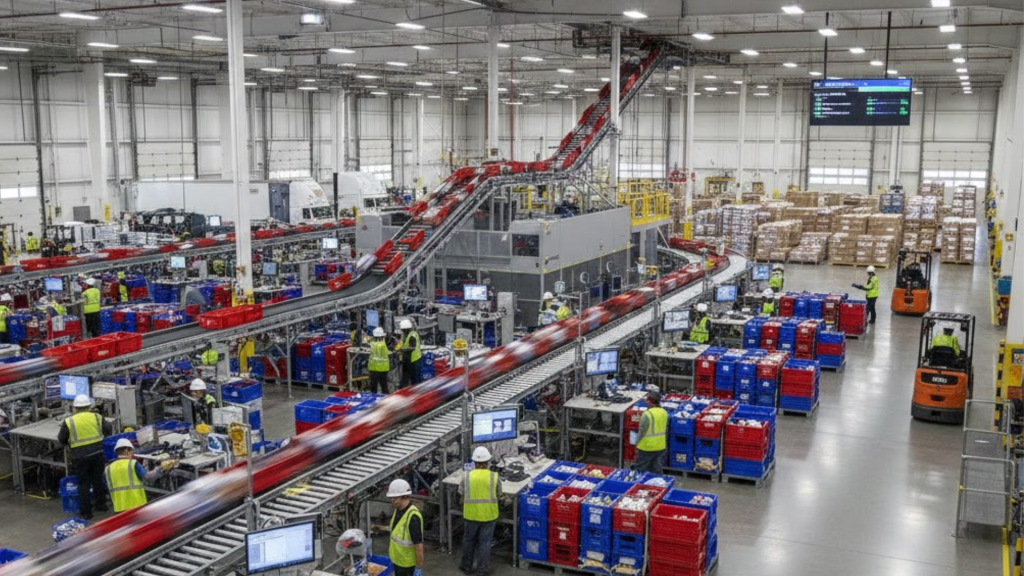
What Is the Difference Between a Warehouse and a Distribution Center?
The primary difference between a warehouse and a distribution center lies in purpose and pace. A warehouse is primarily designed for storing inventory over longer periods, while a distribution center is built to move products quickly from inbound shipments to outbound delivery. Warehouses emphasize organization and storage efficiency, while distribution centers prioritize speed, accuracy, and order fulfillment.
In a warehouse, products may sit on shelves for weeks or even months until they are needed. This makes warehouses ideal for bulk storage, seasonal inventory, or overflow stock. Distribution centers operate as active hubs. Inventory flows in and out constantly, often within hours or days, supported by integrated systems and coordinated workflows.
Distribution centers are typically connected to ecommerce platforms, order management software, and shipping carriers. This integration allows for rapid picking, packing, and shipping. In high-demand markets like Los Angeles, distribution centers play a critical role in meeting customer expectations. For businesses evaluating fulfillment services Los Angeles, understanding this distinction is often the first step toward choosing the right logistics partner.
What Is the Difference Between a Warehouse and a Distribution Center?
From a practical standpoint, the difference becomes clear when you look at how each facility supports daily operations. Warehouses are designed for stability. They provide a secure place to store inventory efficiently and cost-effectively, especially when products do not need to move frequently.
Distribution centers are designed for action. Orders are processed continuously, and workflows are built around reducing delays at every stage. This makes distribution centers especially valuable for ecommerce brands that promise fast shipping and consistent delivery timelines.
Another key distinction is technology and labor. Distribution centers rely heavily on real-time inventory tracking, automation, and coordinated staffing. They require more operational oversight than traditional warehouses, but they also offer greater scalability. For companies exploring fulfillment services Los Angeles, this is often the point where the conversation shifts from simple storage to full-service fulfillment that directly supports growth.
Which Statement Is True About Warehouses and Distribution Centers?
One statement consistently holds true across industries. Warehouses and distribution centers both play essential roles, but they serve different strategic purposes. Warehouses focus on storage and organization, while distribution centers focus on movement, speed, and customer-facing fulfillment.
As ecommerce has grown, customer expectations have changed. Fast delivery, accurate tracking, and reliable service are no longer optional. According to the U.S. Bureau of Labor Statistics, logistics operations have evolved rapidly to support faster distribution and increasingly complex supply chains.
At Ideal Fulfillment, we see brands transition from warehouse-based storage to distribution-focused operations as their order volume increases. Businesses that understand this shift early are better positioned to scale without disrupting customer experience. This understanding is especially important when evaluating fulfillment services Los Angeles, where speed and efficiency are critical.
Is a Warehouse a Distribution Centre?
This is a common question, and the answer is not exactly. A warehouse can be part of a distribution strategy, but it does not automatically function as a distribution center. The distinction lies in capability rather than appearance.
A warehouse becomes a distribution center only when it is equipped with the systems, staffing, and processes needed for rapid order fulfillment. Without picking, packing, shipping integration, and carrier coordination, a warehouse remains primarily a storage facility.
Distribution centers are designed to minimize the time products spend inside the building. Inventory often arrives and leaves quickly, sometimes on the same day. This model is essential for ecommerce brands competing on delivery speed. For businesses using fulfillment services Los Angeles, proximity to customers only matters if the operation can move orders efficiently.
How Long Does a Package Usually Stay at a Distribution Center?
In most cases, a package stays at a distribution center for a very short period. The goal is always rapid turnaround. Many packages are processed and shipped within the same day they arrive. Others may remain for one or two days depending on order volume and carrier schedules.
During peak seasons or major promotions, dwell time may increase slightly, but distribution centers are designed to avoid extended storage. Faster processing improves customer satisfaction and keeps fulfillment operations running smoothly.
At Ideal Fulfillment, minimizing dwell time is a priority. Efficient workflows, real-time inventory systems, and strong carrier relationships allow us to support fast delivery. This operational speed is one of the main reasons businesses choose professional fulfillment services Los Angeles providers instead of handling logistics internally.
Warehouses: When Storage Is the Priority
Warehouses remain a valuable solution for certain business needs. Companies with large volumes of slow-moving inventory, seasonal products, or bulk goods often benefit from warehouse storage. Warehouses provide cost-effective space and help manage inventory levels over time.
For manufacturers or wholesalers, warehouses can act as buffers between production and distribution. They allow businesses to store goods until demand increases. In these scenarios, speed is less critical than organization and space efficiency.
However, as ecommerce sales grow, warehouses alone may struggle to keep up with customer expectations. This is often when businesses begin exploring fulfillment services Los Angeles that offer more dynamic order processing.
Distribution Centers: Built for Speed and Scale
Distribution centers are designed to support high order volumes and fast delivery. They integrate technology, labor, and transportation to create a streamlined fulfillment process.
Orders flow through distribution centers continuously. Inventory management systems track stock in real time, ensuring accuracy and reducing errors. Packing stations are optimized for efficiency, and shipping is coordinated with multiple carriers to meet delivery commitments.
For ecommerce brands, distribution centers are not just logistical assets. They are competitive tools. Fast, reliable fulfillment improves customer satisfaction, reduces cart abandonment, and supports repeat purchases. This is why many growing brands prioritize fulfillment services Los Angeles providers with strong distribution capabilities.
Logistics in Los Angeles
Los Angeles presents unique challenges and opportunities for fulfillment services. The region includes major ports, dense population centers, and high customer expectations. Traffic, carrier availability, and delivery windows all influence logistics performance.
We have worked with brands that initially relied on basic storage solutions and later realized they needed more dynamic fulfillment. As order volume increased, warehousing alone could not meet delivery expectations. Transitioning to distribution-focused fulfillment helped them reduce transit times and improve reliability.
Local expertise matters. Understanding regional shipping patterns and carrier networks can significantly impact outcomes. This is where partnering with a fulfillment services Los Angeles provider with deep local knowledge makes a measurable difference.
How the Right Choice Impacts Customer Experience
Customers may never see your warehouse or distribution center, but they feel the results. Late deliveries, incorrect orders, or damaged packages quickly erode trust.
Efficient fulfillment services builds confidence. Customers who receive orders quickly and accurately are more likely to reorder and recommend a brand. Fulfillment services becomes a silent driver of growth rather than a source of complaints.
For businesses, this means logistics decisions directly affect brand reputation. Choosing the right facility type and partner is about more than cost. It is about protecting the customer experience. This is a core reason many companies invest in professional fulfillment services Los Angeles.
When Businesses Outgrow Simple Storage: Fulfillment Services
Most businesses eventually outgrow basic storage solutions. As order volume increases, managing fulfillment internally becomes time-consuming and error-prone. Labor costs rise, mistakes increase, and growth stalls.
Outsourcing fulfillment allows businesses to regain focus. It provides access to better systems, trained staff, and scalable infrastructure. For many brands, moving to fulfillment services Los Angeles marks a turning point where growth becomes sustainable rather than stressful.
Choosing Between a Warehouse and a Distribution Center
The right choice depends on your business model, order volume, and customer expectations. Businesses focused on storage and bulk inventory may benefit from a warehouse. Brands focused on fast shipping and ecommerce growth often need a distribution center.
Asking the right questions helps clarify the decision. How quickly do orders need to ship? How often does inventory move? What level of visibility and control is required? Comparing options and getting quotes provides clarity before committing.
At Ideal Fulfillment, we help businesses evaluate these factors honestly so they can choose solutions that support long-term success.
Final Thought
Understanding the real difference between a warehouse and a distribution center empowers businesses to make smarter logistics decisions. Warehouses provide stability and storage. Distribution centers provide speed, fulfillment, and scalability. Neither option is inherently better, but choosing the right one at the right time can directly affect customer satisfaction and growth.
In competitive markets like Los Angeles, distribution-focused fulfillment services is increasingly important. With the right strategy and the right partner, logistics become an advantage instead of a bottleneck. For brands seeking dependable fulfillment services Los Angeles, clarity is the foundation of confident decision-making. Reach out to get a clear conversation now, which can prevent costly challenges later.
Follow our social media pages below: