 Ideal Fulfillment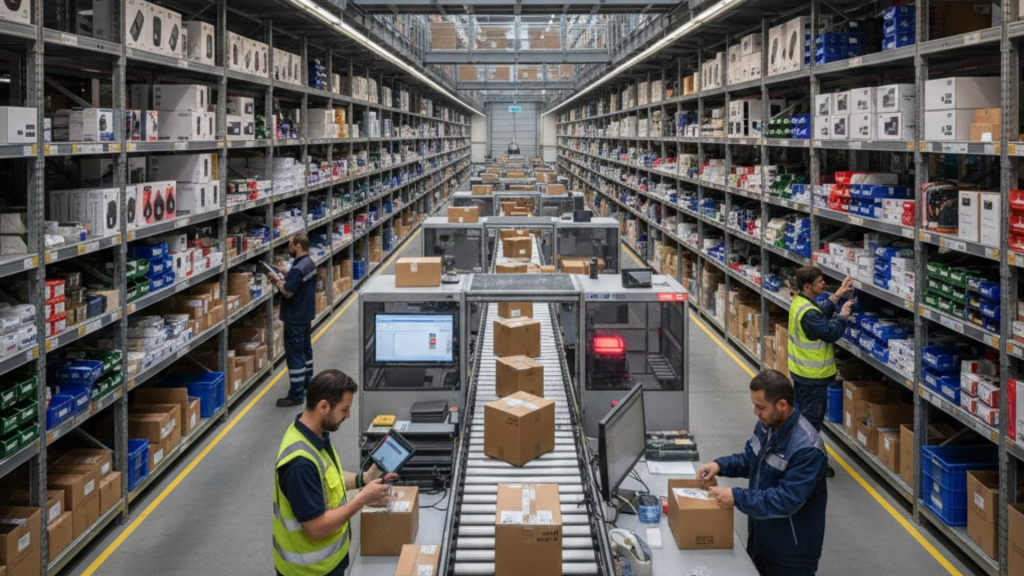
If you have ever ordered something online and had it arrive faster than expected, neatly packed and exactly as promised, you have already experienced ecommerce fulfillment services at work, even if you did not realize it at the time. For many business owners and even curious shoppers, fulfillment feels like a behind-the-scenes mystery. Boxes go out, tracking numbers appear, and somehow the entire process just works.
At Ideal Fulfillment, we speak daily with business owners who are just starting to explore fulfillment and wondering where to begin. Some are scaling quickly and feeling overwhelmed by logistics. Others are launching their first online store and trying to understand how products actually move from a warehouse to a customer’s doorstep. If that sounds familiar, you are in the right place.
Fulfillment can feel complicated at first, especially when you are comparing in-house fulfillment, third-party providers, and more specialized ecommerce solutions. Once you understand the different types of fulfillment services and how they support different business models, the picture becomes much clearer. As a provider of ecommerce fulfillment California businesses rely on, our goal is to explain these options in plain language and help you make informed decisions that support long-term growth.
What Are the Different Types of Fulfillment Services?
Fulfillment services are solutions that handle the storage, packing, shipping, and delivery of products on behalf of a business. The primary types of fulfillment services include in-house fulfillment, third-party fulfillment providers, dropshipping, and hybrid fulfillment models. Each approach serves a different purpose depending on order volume, budget, desired control, and growth stage.
In-house fulfillment means a business manages everything internally, from storing inventory to packing and shipping orders. Third-party fulfillment providers, often called 3PLs, handle these tasks in dedicated warehouses with trained staff and shipping systems. Dropshipping allows businesses to sell products without holding inventory, since items ship directly from a supplier to the customer. Hybrid fulfillment combines multiple methods, such as fulfilling some orders internally while outsourcing others.
The best model depends on how quickly a business is growing, how much flexibility it needs, and how important speed and accuracy are to the customer experience. Many brands begin with one approach and transition to another as volume increases. For companies seeking reliable ecommerce fulfillment California solutions, understanding these models early helps avoid costly mistakes and operational bottlenecks.
What Are the Different Types of Fulfillment Services?
When people first hear the phrase “fulfillment services,” they often assume it refers to a single, standardized solution. In reality, fulfillment is an umbrella term that covers several approaches, each with advantages and trade-offs.
In-house ecommerce fulfillment is where many businesses start. Products are stored at a home, office, or small warehouse, and orders are packed and shipped manually. This approach offers maximum control and low upfront cost, but it can quickly become inefficient as order volume grows. Late nights, cluttered workspaces, and delayed shipments are common growing pains.
Third-party fulfillment services are designed to relieve that pressure. A fulfillment provider stores inventory, processes orders, packs items, and ships them directly to customers. This allows business owners to focus on marketing, product development, and customer relationships instead of logistics. As a trusted ecommerce fulfillment California provider, Ideal Fulfillment supports brands that want scalability, consistency, and a smoother customer experience.
Dropshipping is another option, often appealing to beginners because it requires minimal upfront inventory investment. However, it offers less control over shipping speed, branding, and quality. Hybrid fulfillment blends methods and is common among growing brands that want flexibility while maintaining control over key products.
Choosing the right approach is not about choosing the most popular option. It is about choosing the model that fits your operations, customers, and goals. That is why many businesses compare providers, review workflows, and even get quotes before committing to a fulfillment strategy.
What Are Fulfillment Services?
At its core, fulfillment services exist to remove friction between the moment a customer places an order and the moment that order arrives at their door. Fulfillment services handle inventory storage, order processing, picking and packing, shipping, and often returns.
For ecommerce brands, fulfillment is not just an operational necessity. It is a direct part of the customer experience. Fast delivery, accurate orders, and professional packaging influence trust and repeat purchases. Poor fulfillment leads to negative reviews, refunds, and lost customers.
This is why many growing brands choose to work with specialists instead of managing fulfillment alone. Providers like Ideal Fulfillment are built to handle complexity, volume, and seasonal spikes without sacrificing accuracy. For brands shipping heavily from the West Coast, ecommerce fulfillment California expertise can significantly reduce transit times and shipping costs.
According to Shopify, fulfillment services play a critical role in scaling ecommerce businesses by allowing merchants to focus on growth while logistics are handled by experts. This often leads to better efficiency, improved delivery times, and higher customer satisfaction.
What Are the Steps of the Order Ecommerce Fulfillment Process?
The order ecommerce fulfillment process may feel invisible to customers, but it follows a structured sequence behind the scenes. It begins when inventory is received and logged into a warehouse management system. Products are organized so stock levels remain accurate and accessible.
When a customer places an order, the system generates a picking request. Warehouse staff retrieve the correct items, pack them securely, and label the package for shipment. Carriers then collect the shipment and deliver it to the customer, usually with tracking provided.
After delivery, some ecommerce fulfillment services also manage returns, exchanges, and restocking. This step is especially important for brands focused on long-term customer loyalty.
For businesses, efficiency at each step directly affects operating costs and reputation. A smooth process minimizes errors, reduces delays, and creates consistency. In our experience providing ecommerce fulfillment California services, streamlining these steps allows brands to scale without losing control.
What Are the Different Types of Order Fulfillment?
Order fulfillment methods describe how and where orders are processed within a business. Some companies ship all orders from a single location, while others use multiple warehouses.
Centralized fulfillment uses one main warehouse. This simplifies inventory management and is often cost-effective for newer brands. Distributed fulfillment uses multiple locations, reducing shipping distances and delivery times.
Omnichannel fulfillment integrates online sales, retail inventory, and warehouses into one system. Orders are fulfilled from the most efficient location at the time of purchase.
For brands selling nationwide, partnering with a provider experienced in ecommerce fulfillment California operations offers a strategic advantage. Proximity to ports, carriers, and large customer bases often leads to faster delivery and lower shipping costs.
A California Ecommerce Fulfillment Reality Check
Many California-based brands start small, fulfilling orders from garages or spare rooms. That works initially, but one surge in demand can quickly overwhelm a small setup.
California’s logistics environment is demanding. Customers expect fast shipping, and competition is intense. We have seen brands struggle with rising costs and delayed orders until they partnered with a local fulfillment provider that understood regional logistics.
Working with an ecommerce fulfillment California provider means leveraging local carrier relationships, optimized shipping routes, and scalable systems that keep brands competitive.
How Fulfillment Impacts Customer Trust And Brand Growth
Customers rarely think about fulfillment unless something goes wrong. Late deliveries, damaged products, or incorrect orders erode trust quickly.
Reliable fulfillment builds confidence. Customers who receive orders quickly and accurately are more likely to reorder and recommend a brand. Fulfillment becomes a silent driver of growth rather than a constant concern.
This is why businesses often view fulfillment as an investment rather than an expense. Professional ecommerce fulfillment California services support brand reputation as much as logistics.
When Businesses Outgrow In-House Fulfillment
Most brands reach a point where in-house fulfillment no longer makes sense. Order volume increases, labor costs rise, and mistakes become more frequent.
Outsourcing fulfillment allows businesses to reclaim time and reduce operational stress. It also provides access to better shipping rates and infrastructure.
For many brands, the transition to ecommerce fulfillment California providers marks a turning point where growth becomes manageable instead of chaotic.
Choosing The Right Fulfillment Partner
The right partner offers transparency, scalability, and communication. Businesses should understand pricing, service levels, and technology integration before committing.
Asking questions about turnaround times, error rates, and return handling helps set expectations. Comparing providers ensures alignment with long-term goals.
At Ideal Fulfillment, we believe fulfillment should feel like an extension of your brand, not a black box.
Final Thought
Fulfillment services may operate behind the scenes, but they play a central role in ecommerce success. Understanding the different types of fulfillment services and how they support growth empowers businesses to make smarter decisions.
There is no single best model for everyone. The right solution supports customers, aligns with goals, and allows room to scale. With the right ecommerce fulfillment California partner, fulfillment becomes a competitive advantage instead of a bottleneck.
If you are exploring fulfillment solutions or want clarity on what fits your business, we are here to help. Learn more about Ideal Fulfillment. You can contact us today or call by visiting https://www.idealfulfillment.com/. The right fulfillment strategy starts with a clear conversation.
Follow our social media pages below: