
 Ideal Fulfillment
For supplement and cosmetic brands, fulfillment involves much more than putting products in boxes and shipping them to customers. Every unit may carry a lot number, expiration date, manufacturing code, or specific handling requirement that must remain connected to the product throughout its time in the warehouse.
If a business cannot identify which lot was received, where it was stored, or which customers received it, even a small inventory issue can turn into a costly operational problem. Products may be shipped with insufficient shelf life, aging stock may remain hidden behind newer inventory, and customer service teams may struggle to investigate quality concerns.
Lot tracking fulfillment helps solve these challenges by creating traceability from receiving through final shipment. For supplements, skincare, cosmetics, personal-care products, and other shelf-life-sensitive goods, this level of inventory control is essential to protecting customers and preserving brand trust.
A general warehouse may be able to store and ship products, but a specialized fulfillment provider has the systems and procedures needed to manage lots, expiration dates, inventory rotation, order accuracy, and documented handling instructions.
Here is why specialized fulfillment matters and what brands should look for when selecting a third-party logistics provider.
Table of Contents
What Is Lot Tracking Fulfillment?
Lot tracking fulfillment is a warehouse process that identifies and follows groups of products according to their assigned production or manufacturing lot.
A lot number generally connects products produced under the same manufacturing conditions or during the same production run. When inventory reaches a fulfillment center, the warehouse records that lot information and associates it with the appropriate SKU, quantity, and storage location.
As products move through receiving, storage, picking, packing, kitting, and shipping, the lot information should remain connected to the inventory. A well-designed system can then show:
- Which lots are currently stored
- How many units remain in each lot
- Where each lot is located
- When the lot was received
- Which expiration date is associated with it
- Whether any units are damaged or unavailable
- Which customer or wholesale orders received products from that lot
This traceability gives brands a more precise view of their inventory. Instead of knowing only that 2,000 units of a product are available, the business may be able to see that 800 belong to one lot and 1,200 belong to another.
Ideal Fulfillment provides specialized food, beverage, expiration, and lot-tracking services through an FDA-registered Southern California warehouse. These capabilities can also support supplements, cosmetics, and other brands that need detailed inventory traceability.

Why Standard SKU Tracking Is Not Always Enough
Ordinary inventory systems often track products only at the SKU level. That may be sufficient for merchandise without expiration dates or meaningful production differences, but it can leave important gaps for supplements and cosmetics.
Imagine that a supplement company stores 5,000 bottles of the same vitamin. The bottles have the same product name, size, formula, and SKU, but they came from three different manufacturing runs and have three different expiration dates.
At the SKU level, all 5,000 bottles appear identical. At the lot level, they are three distinct groups that may need to be stored, rotated, investigated, or isolated separately.
The same issue can apply to cosmetics. Several thousand units of a facial serum might share the same SKU while belonging to different production batches. If the manufacturer identifies a concern involving one batch, the brand needs to determine where the affected products are and whether any have already shipped.
Lot tracking fulfillment adds this missing layer of visibility. It allows a warehouse to distinguish between units that would otherwise appear identical within a basic inventory system.
Lot Tracking Begins During Receiving
Reliable traceability starts when products enter the warehouse.
If lot and expiration information is not captured correctly during receiving, the records may remain inaccurate throughout the entire fulfillment process. That is why brands should evaluate a 3PL’s receiving procedures before sending inventory.
An effective lot tracking fulfillment workflow may include:
- Matching the delivery to an expected purchase order
- Confirming SKUs and quantities
- Inspecting cartons or products for visible damage
- Recording lot or batch numbers
- Recording expiration or best-by dates
- Applying barcodes or internal labels when necessary
- Assigning products to appropriate warehouse locations
- Reporting discrepancies to the brand
Ideal Fulfillment’s inventory receiving process includes quantity verification, damage checks, barcode scanning, lot and serial-number documentation, and notifications about receiving exceptions.
Brands should provide clear inbound instructions before products arrive. If a manufacturer uses a particular date format, places lot information in an unusual location, or packs several lots in one shipment, the fulfillment team needs to understand how that inventory should be processed.
Receiving is not simply an administrative step. It creates the foundation for every inventory decision that follows.
Expiration-Date Tracking and Inventory Rotation
Expiration dates introduce another layer of complexity.
Without organized expiration tracking, newer products may be shipped while older products remain in storage. Over time, the older inventory may become difficult or impossible to sell, resulting in unnecessary write-offs.
Many operations use some form of first-expired, first-out rotation, commonly called FEFO. Under this approach, eligible inventory with the earliest expiration date is generally selected before inventory with a later date.
However, the appropriate rotation method depends on the product and the brand’s requirements. A company may specify that products must have a minimum amount of remaining shelf life when shipped to consumers. Retailers and distributors may also have their own acceptance requirements.
A qualified lot tracking fulfillment provider should be able to follow documented rules such as:
- Ship eligible inventory with the earliest expiration date first
- Maintain a minimum remaining shelf-life threshold
- Place products approaching expiration on hold
- Separate expired products from sellable inventory
- Notify the brand when inventory reaches a defined age
- Follow channel-specific shelf-life requirements
Brands should not assume that a warehouse will automatically know which rules apply. The 3PL and the client should document these standards during onboarding and update them when products, channels, or customer requirements change.
Why Lot Tracking Fulfillment Matters for Supplements
Supplements are often part of a customer’s daily routine. Buyers expect to receive the correct product, strength, flavor, count, and formula with sufficient remaining shelf life.
Many supplement catalogs include products that look very similar. Two bottles may use almost identical packaging while containing different strengths or formulas. This makes barcode verification, organized storage, and careful picking important.
Lot tracking fulfillment can help supplement brands:
- Maintain visibility into expiration dates
- Rotate eligible inventory correctly
- Investigate product-quality questions
- Locate inventory from a specific production run
- Prevent aging products from being overlooked
- Document which orders received each lot
- Manage multiple strengths, flavors, and quantities
- Support subscription and bundle programs
If a manufacturer reports an issue, detailed records can help the brand determine the scope of the situation. Instead of treating every unit as potentially affected, the company may be able to focus on inventory and shipments connected to a specific lot.
Ideal Fulfillment discusses how warehouse technology, scanning, and inventory controls can support supplement operations in its guide to automated supplement fulfillment.
Why Cosmetics Also Need Specialized Tracking
Cosmetic and skincare products can also carry batch codes, expiration dates, or period-after-opening information. Requirements vary by product, so each brand must define the data and handling rules relevant to its inventory.
Lot tracking fulfillment gives cosmetic brands greater control over products such as:
- Serums
- Moisturizers
- Sunscreens
- Foundations
- Liquid makeup
- Haircare products
- Bath and body products
- Fragrances
- Beauty supplements
- Products containing active ingredients
Cosmetics can present additional fulfillment challenges. Glass bottles may break, pumps may become damaged, tubes may leak, and outer cartons may become crushed or scuffed. Different shades or formulas may also use nearly identical packaging.
A specialized provider should combine lot tracking with accurate pick-and-pack fulfillment. Barcode scanning and structured workflows can help employees confirm that they selected the correct shade, size, strength, or formula before an order leaves the warehouse.
Traceability and physical product care must work together. Knowing which lot shipped is valuable, but customers still expect the product to arrive accurate, sealed, intact, and attractively presented.
Supporting Targeted Product Investigations
One of the most important benefits of lot tracking fulfillment is the ability to investigate a specific production group.
If a brand receives a complaint about a product’s appearance, consistency, packaging, or performance, lot records can help its team ask better questions:
- Which lot was involved?
- How many units from that lot remain?
- When was the lot received?
- Where is it stored?
- Were products from the same lot shipped to other customers?
- Did the warehouse note damage or irregularities during receiving?
- Are other lots of the same SKU affected?
This information does not replace the brand’s quality, regulatory, or legal processes. It does, however, provide the operational visibility needed to make informed decisions.
If products need to be placed on hold, a 3PL should be able to identify and isolate the relevant inventory. If outreach or another corrective action becomes necessary, shipment history may help the brand determine which orders require review.
Without lot-level information, a company may have to investigate a much larger amount of inventory than necessary.
Compliance Is a Shared Responsibility
The word “compliance” is sometimes used too broadly in fulfillment. A warehouse can support compliant operations, but it does not automatically make a brand or product compliant.
The brand remains responsible for understanding the laws, regulations, retailer standards, product claims, labeling requirements, and storage conditions that apply to its products. The fulfillment provider is responsible for following the agreed-upon warehouse procedures and handling instructions.
A productive relationship begins with clear documentation. Brands should provide their 3PL with requirements for:
- Lot and date capture
- Storage conditions
- Inventory rotation
- Minimum shelf life
- Product holds
- Damaged goods
- Returns
- Disposal
- Recall support
- Record retention
- Channel-specific handling
When comparing providers, ask whether the facility is appropriate for the products being stored. Ideal Fulfillment operates an FDA-registered warehouse and offers inventory tracking for expirable goods, but every brand should confirm that the facility and proposed workflow meet its particular needs.
Lot tracking fulfillment provides the traceability infrastructure. Compliance still depends on accurate product information, appropriate written procedures, employee training, consistent execution, and ongoing oversight.
Technology Makes Traceability Scalable
Manual spreadsheets may work when a company has a few products and a small amount of inventory. As order volume grows, manual lot tracking becomes difficult to maintain.
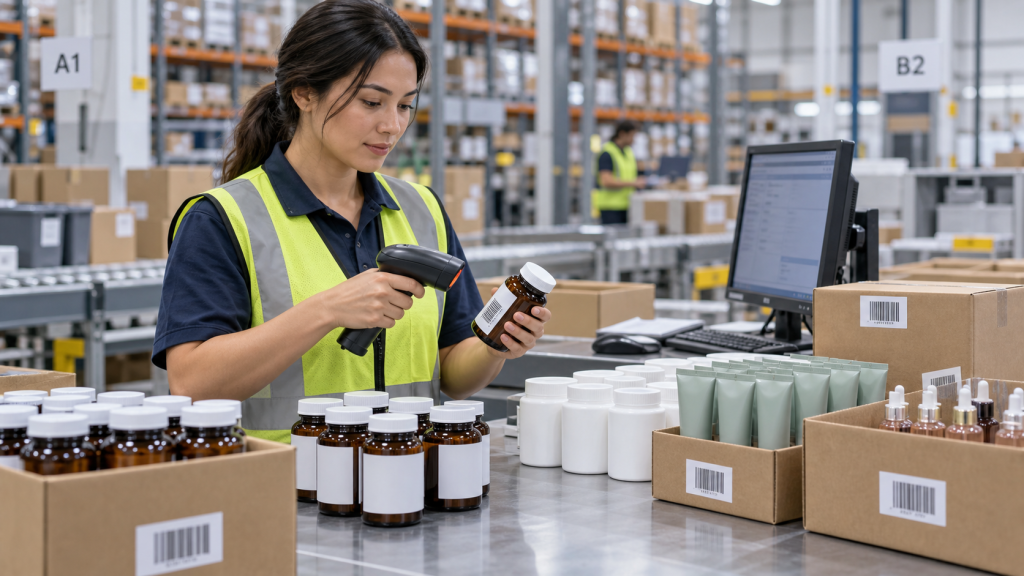
A modern warehouse management system can connect a product’s SKU, lot, expiration date, quantity, location, and order history. Barcode scanning then helps warehouse employees update or verify that information as inventory moves.
Technology can support:
- Receiving by lot
- Inventory by expiration date
- Location-level stock visibility
- Picking rules
- Product holds
- Movement history
- Low-stock notifications
- Aging-inventory reports
- Order traceability
- Inventory reconciliation
The system should also connect with the platforms where the brand sells. Ideal Fulfillment offers e-commerce and marketplace integrations for platforms such as Shopify, WooCommerce, BigCommerce, Amazon, Walmart, eBay, and other systems.
Integrations allow orders to flow into the warehouse automatically while inventory and tracking updates return to the appropriate sales channel. This reduces manual entry and gives brands a clearer view of their operation.
However, technology is only as effective as the procedures surrounding it. Employees must scan the correct items, exceptions must be investigated, and product data must remain accurate.
The Role of Lot Tracking in Kitting and Bundling
Supplements and cosmetics are commonly sold in sets. A supplement brand may create a daily wellness pack, while a skincare company might offer a routine containing a cleanser, serum, and moisturizer.
These bundles can make lot tracking more complicated because the finished kit may contain components from several production lots.
A professional provider offering kitting and assembly services should be able to document the movement of individual components into finished kits according to the program’s requirements.
This matters for:
- Subscription boxes
- Skincare routines
- Vitamin packs
- Promotional bundles
- Sample collections
- Influencer mailers
- Gift sets
- Retail-ready packages
The warehouse should define how component inventory is deducted, how completed kits are identified, and how lot information remains traceable when necessary.
Quality checks are also important. A missing component, incorrect product, or short-dated item can undermine the entire customer experience. Clear work orders and repeatable assembly procedures help maintain accuracy as kitting volume increases.
Returns Require Careful Product Disposition
Returned supplements and cosmetics cannot always be treated like returned apparel or household goods.
A package may appear undamaged while the warehouse has no way to verify how it was stored after delivery. A seal may be broken, a pump may have been used, or a product may have been exposed to unsuitable conditions.
Brands should create written return-disposition rules covering:
- Unopened and sealed products
- Products with damaged packaging
- Opened cosmetics
- Broken safety seals
- Leaking containers
- Products approaching expiration
- Items from a held or affected lot
- Disposal or return-to-vendor procedures
The fulfillment center should record the return, inspect it according to the brand’s instructions, and place it in the proper inventory status. Products should not automatically return to sellable stock simply because the outer package looks acceptable.
Lot tracking fulfillment can add useful context by identifying the production lot associated with a returned product and connecting it to other inventory records.
Questions to Ask a Lot Tracking Fulfillment Provider
Before selecting a 3PL, ask detailed questions about its systems and procedures:
- How are lot numbers captured during receiving?
- How are expiration dates recorded?
- Can inventory be viewed by SKU, lot, date, and location?
- Can the warehouse follow FEFO or another rotation method?
- Can minimum shelf-life rules vary by customer or channel?
- How are expired, damaged, and held products separated?
- Can the system identify which orders received a specific lot?
- How are lots managed when products are assembled into kits?
- What reports are available to the brand?
- How are discrepancies investigated?
- Can the warehouse accommodate our documented storage requirements?
- What happens when inventory approaches expiration?
- How does the provider process returned supplements or cosmetics?
- Who is responsible for updating handling instructions?
- How quickly can affected inventory be located and placed on hold?
A capable provider should answer these questions clearly and explain what information it needs from your team.
Choosing the Right Specialized Fulfillment Partner
The best provider is not simply the warehouse with the lowest pick fee. It is the partner capable of protecting your inventory, following your procedures, supporting your sales channels, and scaling with your business.
When evaluating lot tracking fulfillment, consider:
- Receiving accuracy
- Lot and expiration-date visibility
- Warehouse technology
- Barcode verification
- Inventory rotation capabilities
- Kitting and subscription support
- Product-handling procedures
- Packaging quality
- Shipping options
- Returns management
- Communication
- Storage capacity
- Transparent pricing
Ideal Fulfillment offers comprehensive 3PL services, including receiving, storage, e-commerce fulfillment, lot and expiration tracking, kitting, shipping, and custom projects. Its Southern California location also provides access to the Los Angeles and San Diego markets and nearby ports.
Build a More Traceable Fulfillment Operation
Supplements and cosmetics require a fulfillment process built around accuracy, visibility, and accountability.
Lot tracking fulfillment helps brands understand exactly what inventory they have, where it is stored, when it expires, and which orders received it. When combined with barcode scanning, appropriate rotation rules, careful packaging, and responsive communication, that traceability can reduce waste and help teams respond more effectively when a product issue arises.
Ideal Fulfillment provides the warehouse infrastructure, technology, and hands-on support needed to manage sensitive and expiration-dated inventory. Whether your business sells supplements, skincare, cosmetics, subscription products, or bundled routines, the right fulfillment system can protect both operational performance and customer trust.
Ready to improve visibility into your inventory? Contact Ideal Fulfillment to discuss your products, lot-tracking requirements, expiration rules, order volume, and growth plans.