 Ideal Fulfillment
At some point, almost every growing brand makes the same mistake. They find a 3PL that’s great at direct-to-consumer shipping, so they sign on. Then they land a wholesale account and discover their current partner can’t handle EDI or vendor compliance — so they bring on a second 3PL. Then they get picked up by a regional retail chain, and that second partner can’t do floor-ready merchandise prep either — so now they’re talking to a third.
Before long, they’re managing three contracts, three inventory pools, three sets of integrations, and three customer service relationships. Tracking down a lost pallet means making three phone calls. Reconciling inventory at month-end means pulling reports from three different portals. And none of those partners has a complete picture of the business.
This is one of the most common and most avoidable operational traps in e-commerce and omnichannel retail. The fix is simpler than most brands expect: find one 3PL that can do it all, and consolidate.
Table of Contents
The Hidden Costs of Managing Multiple 3PL Partners
On paper, splitting fulfillment across multiple partners can seem like a reasonable strategy. You’re using specialists, right? Each 3PL does what it does best. In practice, the coordination overhead and the cracks between partners create costs that rarely show up clearly on any single invoice — but they add up fast.
Split Inventory Is a Cash Flow Problem
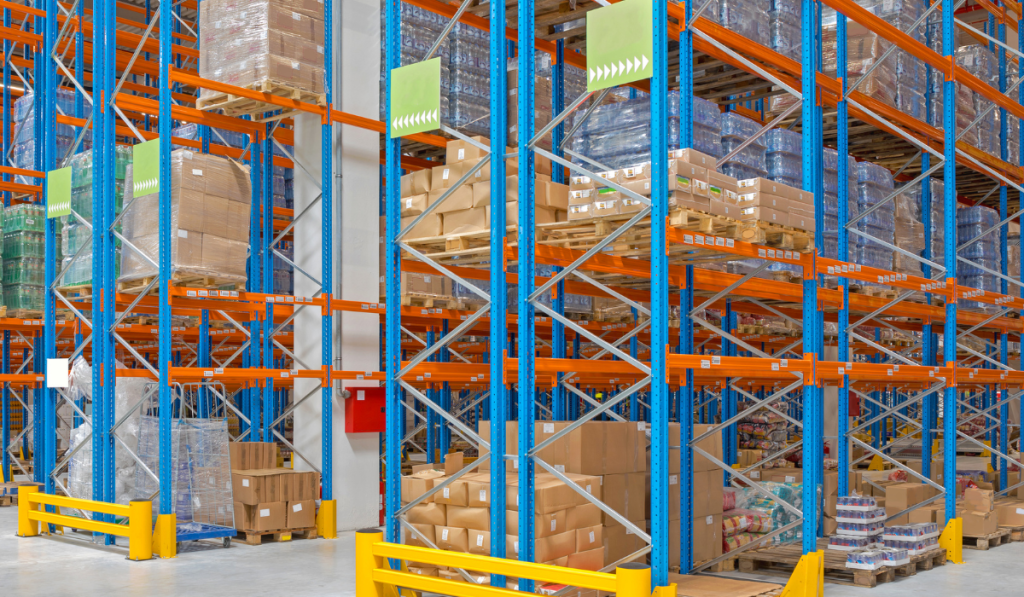
When your stock lives in two or three warehouses run by different 3PL providers, you have to buffer inventory at each location to avoid stockouts. That means tying up working capital in safety stock you wouldn’t need if everything lived in one place. A brand doing $5 million in annual revenue might be sitting on $200,000–$400,000 in excess inventory simply because their fulfillment is fragmented.
The math gets worse when demand shifts unexpectedly. If your D2C channel spikes and your inventory is stuck at your B2B-focused 3PL across the country, you either expedite a transfer (expensive), stockout on your direct channel (costly in a different way), or start making allocation decisions that no one on your team has time to manage well.
Errors Multiply at the Handoff Points
When multiple 3PL partners are in play, things fall through the gaps. A purchase order gets entered into the wrong system. A return comes back to the wrong warehouse. An inventory count at one partner doesn’t reconcile with what your accounting system expects because the other partner received a shipment that wasn’t logged in time. Every one of these errors costs time to investigate and often money to fix.
A single 3PL eliminates most of those handoff points. There’s one system of record, one team accountable for accuracy, and one place to look when something goes wrong.
Management Bandwidth Is Finite
Every additional 3PL relationship you manage is a relationship that needs attention: onboarding, performance reviews, contract renewals, problem escalations, integration maintenance. For a lean operations team — or a founder doing ops themselves — that attention is genuinely scarce. Hours spent managing fulfillment partners are hours not spent on product development, marketing, or the wholesale relationships that actually drive revenue.
Consolidating to a single 3PL doesn’t just reduce costs. It gives your team time back.
What to Actually Look for in a Single 3PL Partner
Not every 3PL is built to handle the full range of what a multi-channel brand needs. A lot of 3PL providers specialize — they’re excellent at high-volume DTC small parcel, or they’ve built deep expertise in retail compliance, but they can’t credibly do both. Before consolidating, it’s worth being clear on what capabilities a true multi-channel 3PL needs to have.
Direct-to-Consumer Fulfillment Infrastructure
D2C is fast, high-volume, and unforgiving. Consumers have been trained by Amazon to expect same- or next-day shipping, accurate tracking updates, and painless returns. A 3PL handling your D2C orders needs to have the pick-and-pack speed to turn orders same-day, the carrier relationships to offer cost-effective rates across USPS, UPS, FedEx, and regional carriers, and the systems to push tracking information back to your storefront automatically.
Beyond speed, D2C often involves branded packaging — custom boxes, inserts, tissue, stickers — that needs to be applied consistently at the order level. The right 3PL has the team and the processes to execute that at scale without errors and without slowing down throughput.
EDI and B2B Compliance Capability
Selling wholesale to major retailers, distributors, or institutional buyers means living inside their systems and their rules. Most require EDI — Electronic Data Interchange — for purchase orders, advance ship notices (ASNs), and invoices. They have routing guides that specify exactly how shipments must be labeled, packed, and delivered. Violations generate chargebacks that can wipe out the margin on an entire order.
A 3PL that’s serious about B2B has EDI connections already built for the major trading partner networks, maintains routing guide profiles for large retail accounts, and has internal quality checks that catch compliance issues before orders leave the dock. This isn’t a capability you can improvise — it requires investment and expertise.
Retail Replenishment and Floor-Ready Prep
Selling into brick-and-mortar retail chains adds another layer of complexity on top of B2B. Stores need product that’s ready to go directly to the sales floor — properly ticketed, tagged, prepped, and packed at the store level if required. A 3PL handling retail replenishment needs to understand floor-ready requirements, execute them consistently across large order volumes, and manage the store-level allocation that gets the right assortment to the right locations.
Kitting, Assembly, and Custom Configurations
Many brands sell the same underlying products in multiple configurations depending on the channel. D2C customers might get a single-unit order in a gift box. A wholesale buyer might order a master carton of 12 units. A retail chain might want a floor display pre-assembled and ready to set. A subscription service might need weekly kitting of multiple SKUs into a single outbound box.
A capable 3PL can handle all of these configurations without you managing a separate assembly operation. That flexibility is what makes consolidation actually work — you’re not compromising on any channel’s requirements; you’re executing them all from a single location.
Returns Management Across Channels
Returns look very different depending on which channel they’re coming from. A D2C consumer return might need a prepaid label, a quick inspection, and either restocking or disposal. A B2B return might involve a claims process, negotiated deductions, and routing of product to a different storage location. A retail return might come back in bulk, mixed-condition, requiring sorting and grading before any inventory decisions can be made.
The right 3PL has structured reverse logistics workflows for each return type, tracks disposition in real time, and reports on return rates by SKU and channel — giving you the data you need to make decisions about product quality, packaging, and return policy.
The Technology Layer: Why Integration Is Everything
A single 3PL is only as powerful as its technology. If your fulfillment partner can’t connect cleanly to the platforms and marketplaces where you sell, you’ll end up doing manual data entry to bridge the gaps — which defeats most of the benefit of consolidation.
The best 3PL partners have native integrations with the major commerce platforms: Shopify, WooCommerce, BigCommerce, Amazon Seller Central, Walmart Marketplace, and the EDI networks used by major retailers. Orders flow in automatically. Inventory levels sync in real time. Tracking information pushes back to your storefront without any intervention from your team.
That real-time inventory sync is particularly valuable when you’re selling across multiple channels simultaneously. A unified inventory pool managed by one 3PL, connected to all your storefronts, means you’re never overselling because a channel had stale stock counts. You’re never making an emergency transfer because one channel ran out while another channel’s allocation was sitting idle.
Good 3PL technology also gives you visibility — a client-facing portal or dashboard where you can see live inventory levels by SKU, order status across all channels, inbound receiving status, and returns disposition. That visibility transforms your ability to forecast, plan promotions, and make purchasing decisions.
How Consolidation Works in Practice
Brands that have been running split fulfillment operations sometimes worry that consolidating to a single 3PL will be disruptive — a painful migration that creates service gaps while you’re getting set up. Done right, the transition is significantly smoother than they expect.
The key is a 3PL with a structured onboarding process: a dedicated onboarding team, a clear migration timeline, and the systems experience to pull your historical order data, SKU catalog, and integration connections into their platform quickly. At Ideal Fulfillment, new clients typically transition in phases — D2C channels first, then B2B, then retail replenishment — so each channel is running cleanly before the next is added.
Inventory transfer is usually the most time-sensitive piece. A good 3PL manages inbound receiving with enough urgency to get your stock processed and available quickly, minimizing the window where orders might be delayed.
Once you’re live, the benefits show up fast. Operations teams that were spending hours a week reconciling inventory across multiple systems find that that time disappears. Chargeback rates from retail accounts drop as the compliance team at your 3PL brings rigor to routing guide adherence. D2C ship times improve as a faster, more capable fulfillment operation takes over.
The Strategic Case: Why Your 3PL Choice Is a Growth Decision
Choosing the right 3PL isn’t just an operational decision — it’s a strategic one. The partner you choose either enables your next stage of growth or constrains it.
A fragmented, multi-partner setup constrains growth in specific ways. Adding a new channel means finding another partner, negotiating another contract, building another integration. Scaling volume means splitting management attention further. Entering a new market means yet another logistics relationship to manage.
A single, capable 3PL accelerates growth. When Ideal Fulfillment is handling your D2C, B2B, and retail replenishment from a unified operation, launching a new wholesale account is a workflow change — not a new vendor search. Entering a new marketplace means adding an integration to a system that’s already connected to your inventory. Scaling from 10,000 orders a month to 100,000 is your 3PL’s problem to solve, not yours.
That’s the real value of consolidation: it takes operational complexity off your plate permanently, not just temporarily.
Why Brands Choose Ideal Fulfillment for Consolidation
Ideal Fulfillment was built specifically to serve brands that are done juggling. The capabilities required to handle D2C, B2B, and multi-store retail from a single 3PL aren’t bolted on — they’re core to how the operation runs. EDI integrations, retail compliance expertise, branded packaging and kitting, reverse logistics, real-time inventory visibility — all of it is part of the platform.
Clients who consolidate with Ideal Fulfillment typically see measurable results within the first 90 days: reduced chargeback rates, lower safety stock requirements, faster D2C ship times, and — most importantly — hours of management time returned to the team every week.
If you’re currently managing multiple 3PL relationships and feeling the friction, the question isn’t whether consolidation would help. The question is how quickly you want to get there.
One 3PL. Every Channel. Less Overhead.
The brands that grow fastest aren’t the ones with the most sophisticated fulfillment setups. They’re the ones who removed fulfillment as a constraint early and redirected that energy into product and growth.
A single, capable 3PL partner is how you get there. Ideal Fulfillment is ready to be that partner. Let’s talk about what consolidation looks like for your operation.